Nordic Countries and NATO Membership – Written by the editorial board of European Defence League Website. The landscape of European security underwent a profound transformation in recent years, especially with respect to the Nordic countries and NATO membership. Traditionally known for their distinct approaches to defense and neutrality, the Nordic nations have followed divergent paths regarding NATO alliances. However, the security dynamics shifted dramatically following the 2022 Russian invasion of Ukraine. This pivotal event ignited historic membership bids from traditionally non-aligned Nordic countries, Finland and Sweden, fundamentally reshaping the security framework of Northern Europe and signaling a new chapter in regional defense cooperation. In this article, we explore the evolution of Nordic neutrality, Finland and Sweden’s journeys to NATO, and the broader strategic and geopolitical implications of their accession.
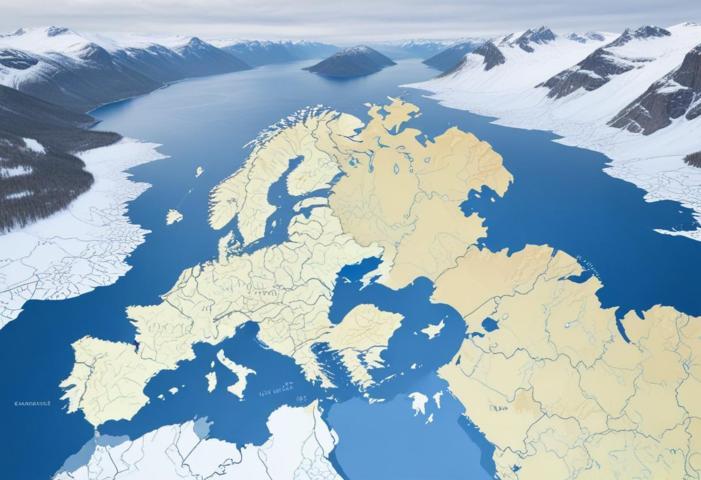
The Shift in Nordic Neutrality
The shift in Nordic neutrality represents a profound transformation in the region’s security posture, driven primarily by evolving geopolitical realities. While Finland and Sweden had historically adhered to policies of military non-alignment to navigate the complexities of the Cold War and maintain stability with Russia, the 2022 Russian invasion of Ukraine fundamentally altered the strategic calculus. This event exposed the limitations of neutrality in addressing contemporary security threats, prompting a decisive reevaluation by both nations. The resulting surge in public and political support for NATO membership reflects a collective recognition that active participation in a collective defense alliance is essential for safeguarding national sovereignty and regional peace. This marked transition not only reshapes the Nordic security landscape but also signals a new era of enhanced cooperation and strategic alignment within Northern Europe.
Historical Context
For decades, the principle of Nordic neutrality was a defining feature of Finland and Sweden’s foreign policies. Both countries adopted a stance of military non-alignment, especially during the turbulent Cold War era, carefully navigating their relationship with their powerful neighbor, Russia. This policy aimed to avoid provoking conflict while maintaining independence in defense decisions. Finland, in particular, pursued a cautious balancing act, cultivated through decades of diplomatic engagement and mutual understanding with Moscow.
In stark contrast, Norway, Denmark, and Iceland have long been embedded within the NATO framework. Norway and Denmark were founding members of the alliance in 1949, alongside the United States, the United Kingdom, and other Western European countries. Iceland, while lacking a military force of its own, also became a founding member, providing strategic North Atlantic positioning, particularly during the Cold War.
The Catalyst for Change
The carefully maintained status quo shattered in 2022 with Russia’s full-scale invasion of Ukraine. This unprecedented act of aggression fundamentally altered the European security environment. For Finland and Sweden, the invasion raised existential questions about their military non-alignment policies, transforming neutrality from a protective shield into a potential security vulnerability.
Public sentiment shifted dramatically in both countries, with widespread and growing support for NATO membership. The invasion exposed the risks of remaining outside collective defense arrangements, sparking political momentum toward formal alliance integration. This rapid change underscored how external security threats can reshape national defense policies and regional alliances.
Finland’s Path to Membership
Finland’s path to NATO membership marks a significant departure from its longstanding policy of military non-alignment. The rapid and decisive parliamentary approval, coupled with an expedited accession process, underscores the urgency and resolve with which Finland responded to the changing security environment following the 2022 Russian invasion of Ukraine. By becoming the 31st member of NATO, Finland not only enhances its own national security but also substantially strengthens the alliance’s eastern flank. This strategic integration fortifies collective defense capabilities and demonstrates Finland’s commitment to contributing actively to regional and transatlantic security in an increasingly complex geopolitical landscape.
The Decision Process
Responding swiftly to the new geopolitical reality, Finland officially applied to join NATO in May 2022. This significant move was backed by a supermajority in the Finnish Parliament, illustrating the broad political consensus and public support in favor of joining the alliance. The decision marked a historic pivot away from Finland’s long-standing policy of military non-alignment toward collective security.
The Accession
Remarkably, Finland’s accession process unfolded at an unprecedented pace — the fastest in NATO’s history. On April 4, 2023, Finland formally became the 31st member of NATO. This swift integration reflected both Finland’s preparedness and the alliance’s recognition of the strategic importance of welcoming the country into its fold.
Strategic Implications
Finland’s membership carries substantial strategic weight. Sharing a border of over 1,300 kilometers (approximately 830 miles) with Russia, Finland significantly bolsters NATO’s eastern flank. Its inclusion enhances deterrence capabilities, complicates potential Russian military calculations, and marks a major strengthening of NATO’s geographic and operational depth in Northern Europe.
Sweden’s Journey to NATO
Sweden’s journey to NATO membership represents a historic and transformative shift from decades of military non-alignment to full integration within a collective security alliance. Despite facing initial obstacles, including vetoes from Türkiye and Hungary that stemmed from political and security concerns, Sweden’s persistent diplomatic efforts ultimately secured the necessary approvals. Sweden’s accession as NATO’s 32nd member not only strengthens the alliance’s northern flank but also solidifies its commitment to regional stability and cooperation. This milestone underscores Sweden’s resolve to contribute actively to European security amid evolving geopolitical challenges.
The Application
Parallel to Finland’s move, Sweden submitted its own application to NATO membership in May 2022. This step marked a historic shift for Sweden as well, given its extensive tradition of military non-alignment.
The Obstacles
Unlike Finland’s relatively smooth accession, Sweden faced notable challenges on its path to membership. Both Türkiye and Hungary initially vetoed Sweden’s bid. Türkiye voiced concerns over Sweden’s perceived support for Kurdish groups it considers terrorist organizations, while Hungary’s reservations were largely political in nature. These vetoes stalled the accession process and necessitated extensive diplomatic negotiations.
Through persistent dialogue, Sweden addressed the issues raised, eventually securing agreement from both countries. This diplomatic resolution showcased the complex, and sometimes political, nature of NATO’s enlargement process.
Final Accession
By early 2024, Türkiye and Hungary ratified Sweden’s membership bid. On March 7, 2024, Sweden officially became the 32nd NATO member, marking the completion of its transition from neutrality to alliance membership. This milestone further consolidated NATO’s presence in Northern Europe.
Strategic and Geopolitical Impact
The evolving relationship between the Nordic countries and NATO membership reflects a dramatic shift born of changing security realities. The historic decisions by Finland and Sweden to join NATO, alongside long-standing members Norway, Denmark, and Iceland, reinforce a more united and capable Northern European defense posture. As the region adapts and deepens cooperation within the alliance, it simultaneously navigates the geopolitical challenges posed by a resurgent Russia, underscoring the critical importance of collective security in today’s world.
Strengthening the Nordic Region
With Finland and Sweden now members alongside Norway, Denmark, and Iceland, for the first time all five Nordic countries belong to the same military alliance. This unprecedented unity fosters a more integrated defense posture across the region. Enhanced military cooperation, joint exercises, and coordinated strategies can now be pursued more seamlessly, improving regional security and deterrence.
Impact on NATO
The entry of Finland and Sweden brings critical military capabilities to NATO. Both countries have well-trained armed forces, modern equipment, and specialized skill sets, which enrich the alliance’s collective defense. Geographically, their membership extends NATO’s influence in the Baltic Sea and Arctic regions, which are areas of increasing strategic focus amid global power competition.
Together, these factors elevate NATO’s deterrence posture, sending a clear message of resolve and unity to potential adversaries. The expansion marks a significant strengthening of NATO’s northern and eastern frontiers.
Russian Reaction
Russia responded strongly and negatively to NATO’s expansion into territories it has historically viewed as within its sphere of influence. Moscow condemned the inclusion of Finland and Sweden as direct threats to its national security. It articulated various military countermeasures, including the potential deployment of tactical nuclear weapons and increased military assets near the new borders.
This reaction highlights the broader geopolitical tensions that underpin Europe’s security landscape and underscores the high stakes involved in NATO’s enlargement process.