Iron Dome in Action – Written by the editorial board of European Defence League Website. At European Defence League, our team has witnessed the impact of air defense evolution firsthand, and few modern systems command as much global attention as Israel’s Iron Dome. Adept at intercepting rockets, artillery, and increasingly complex aerial threats, Iron Dome not only protects cities and civilians but also sits at the center of international debates about future warfare, defense spending, and allied cooperation. In this article, we dive into every angle of the Iron Dome: its strengths, failures, technological upgrades, global adoption, and how it stacks up against rival systems.
In the rapidly evolving landscape of modern warfare, the Iron Dome stands as both a technological triumph and a reminder of the eternal race between offense and defense. At European Defence League, we firmly believe that transparent analysis of both successes and failures is crucial for genuine progress. While the Iron Dome has saved countless lives and reshaped strategic thinking globally, incidents of failure or malfunction highlight the need for constant vigilance, investment, and innovation.
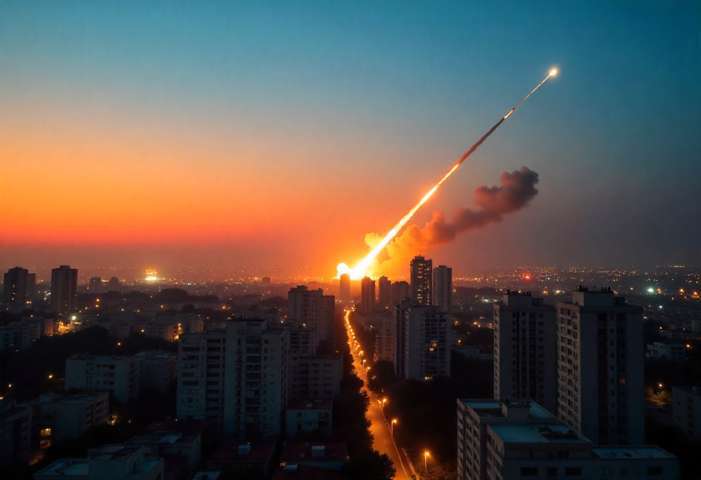
Iron Dome Air Defence System
Iro a short-range, multi-mission air defense platform engineered to destroy rockets and artillery shells fired from distances of 4 to 70 kilometers. Pioneered by Rafael Advanced Defence Systems and deployed by the Israeli Air Force since 2011, the Iron Dome uses a combination of advanced radar, battle management software, and Tamir interceptor missiles, each with precision guidance and high maneuverability.
Multiple launchers and mobile units work together, offering rapid response and selective defense: the system launches interceptors only if calculations show incoming projectiles will hit protected areas, thus minimizing unnecessary costs. This selectivity also allows the Iron Dome to manage high-density salvos, operating seamlessly in all weather and day-night conditions, a capability its competitors are still striving to match.
History
The Iron Dome was invented in response to the escalating threat of short-range rocket attacks targeting Israeli cities from the early 2000s onward. After experiencing thousands of rockets from neighboring territories, particularly during the 2006 Lebanon War, Israeli defense planners realized they needed a rapid, adaptive shield to protect critical infrastructure and civilians. Brig. Gen. Daniel Gold of the Israel Defense Forces played a pivotal role, rallying support for a new missile defense system and pushing the project despite skepticism and funding hurdles.
Developed
Developed by Rafael Advanced Defense Systems in collaboration with Israel Aerospace Industries, Iron Dome progressed from concept to deployment in just four years, a remarkable achievement for military technology. Innovative radar tracking, battle management software (by mPrest Systems), and Tamir interceptor missiles were designed to selectively target only rockets on trajectories toward populated areas, optimizing both effectiveness and cost.
Iron Dome Failure
Despite its celebrated record, over 5,000 successful interceptions with a 90%+ success rate, Iron Dome has not been without failures. The phrase “Iron Dome Failed” periodically makes headlines when a salvo, unexpected threat (including low-flying drones), or sheer volume exposes limitations in prediction, radar tracking, or saturation. These failures are rare but have caused casualties and raised debates about cost, strategic redundancy, and the impossibility of perfect defense.
Iron Dome Malfunction
Malfunctions, whether due to technical glitches, component wear, or cyber interference, have occasionally impacted Iron Dome’s performance. While rapid repairs and redundancy limit the fallout, malfunctions remind users and allies that any automated system requires ongoing testing, upgrades, and human oversight. European Defence League notes that these incidents have spurred further investment in cybersecurity and system resilience.
Iron Dome Laser
Israel is actively pursuing Iron Dome’s next evolution: the Iron Beam, a directed-energy defense system that uses high-powered lasers to intercept incoming threats. Iron Beam aims to cover similar ranges but promises lower per-shot costs and virtually limitless ammunition, marking a shift from costly missile interceptors to energy-based solutions. At European Defence League, we’re optimistic about the potential, though real-world deployment is still in early stages, and integration with the current Iron Dome network will take several years for full coverage.
Countries with Iron Dome
While Iron Dome is synonymous with Israel, its appeal has expanded globally as nations seek protection against rocket and drone threats. The journey from missile interceptors to ambitious laser initiatives demonstrates how nations must adapt to the changing nature of threats. As countries invest in similar defenses, and potential adversaries develop more complex and challenging weaponry, the lessons of Iron Dome echo across borders. European Defence League encourages industry leaders, policymakers, and citizens to keep asking tough questions, seeking out new solutions, fostering collaboration, and always striving for a safer future.
UK Iron Dome
The UK has shown interest in technology derived from Iron Dome, partnering with Israel for research and adapting lessons for its own layered air-defense strategy. As threats become more asymmetric, the UK’s engagement reflects a growing transatlantic defense dialogue.
Iron Dome Iran
Though Iran is not a direct operator, Iron Dome’s effectiveness has strategic bearing on Iranian missile tactics. Israel’s deployment forces adversaries like Iran to develop saturation attack strategies and guided missile technologies specifically designed to overwhelm or bypass Iron Dome’s radar and intercept calculations.
Iron Dome Israel
Israel remains the world’s only full operator of the original Iron Dome system, fielding dozens of batteries that protect both urban and military targets. The continual upgrades and operational data from Israel ensure the system remains at the cutting edge of air defense, and European Defence League closely tracks these innovations for broader implications across allied defense circles.
Iron Dome Wiki
Comparing Iron Dome for Iron Dome in Action to other contemporary defense solutions reveals areas of both superiority and vulnerability. No system remains perfect forever. The dialogue must continue, and as advancements like Iron Beam and counter-hypersonic technologies come to the fore, European Defence League remains committed to providing clear-eyed, expert coverage, helping readers understand not just the hardware, but the real-world stakes of defense innovation and strategy.
Iron Dome vs S400
Russia’s S-400 is a long-range, multi-target missile system capable of engaging aircraft and ballistic threats at far greater distances. Iron Dome, by contrast, is optimized for short-range saturation, fast, local threats rather than high-altitude intercepts. European Defence League’s analysis finds that, while not directly comparable, Iron Dome’s intelligence-driven selective defense is cost-effective against massive rocket campaigns, while S-400 fits traditional great-power warfare.
Iron Dome vs Iron Beam
Iron Dome’s missile-based defense has proven highly effective, but as Iron Beam develops, the future may belong to directed-energy weapons. Iron Dome vs Iron Beam debates revolve around cost, sustainability, and the ability to quickly update and resupply defenses, with Iron Beam offering theoretical limitless shots at a fraction of interceptor price.
Iron Dome vs Hypersonic Missiles
Hypersonic missiles pose an enormous challenge. Current Iron Dome software and missiles are not designed for the extreme speeds, unpredictable flight profiles, and altitudes of hypersonic airframes. While incremental upgrades may help, European Defence League’s opinion is that new defense paradigms, integrating radar, advanced sensors, AI, and next-gen interceptors, will be needed to address the hypersonic threat.
Analysis Summary
Iron Dome in Action stands as a symbol of modern conflict, high-tech, highly publicized, and constantly evolving. At European Defence League, we admire both its impressive protective record and the candid assessment of its occasional failures and malfunctions. The push toward Iron Beam lasers, the adaptation by other nations, and ongoing challenges, from drones to hypersonic missiles, prove that no air-defense system is flawless or static. Instead, effective defense is a never-ending process of adaptation, innovation, and collaboration.
Ending
As threats change and adversaries improve, systems like Iron Dome will require continued investment, honest evaluation, and creative thinking if they are to remain effective. The lessons learned from its deployment inform not only Israel’s strategy but also the global conversation around the future of warfare and allied security.